
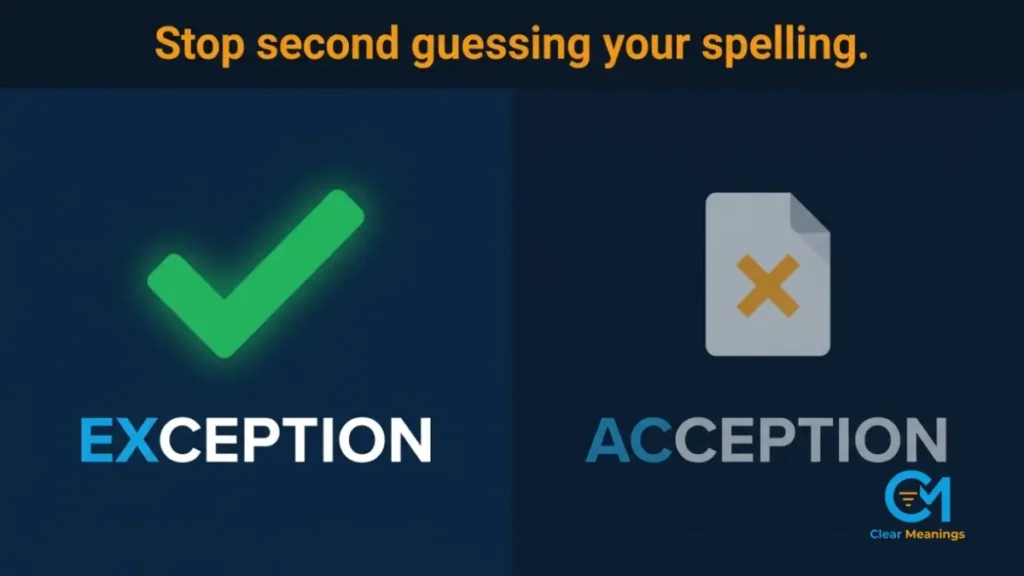

Drafting an urgent cover letter or a legally binding brief comes with high stakes. Second-guessing your vocabulary at the final proofreading stage creates unnecessary anxiety. The confusion surrounding exception vs acception trips up even seasoned professionals during high-pressure writing tasks.
This guide breaks down the exact correct usage for corporate communications. We will outline the specific spelling to use, analyze the tone of these words in professional contexts, and provide exact email templates to prevent future embarrassment.
The Immediate Verdict On Exception Vs Acception For Urgent Documents
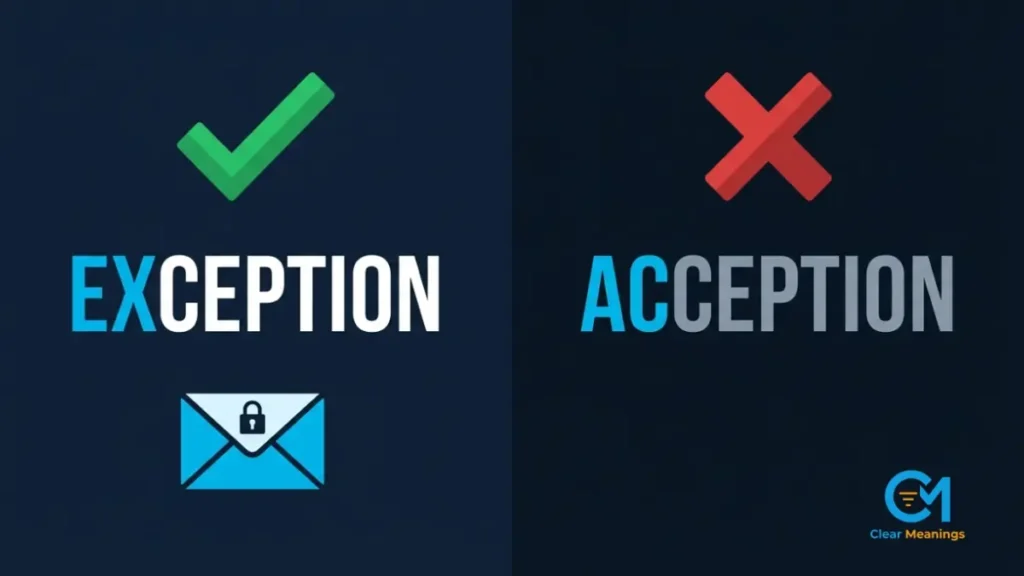
Exception is the only correct and recognized noun to describe a person or thing that is excluded from a general statement or does not follow a rule. Acception is an archaic, obsolete word that modern readers and hiring managers will immediately view as a glaring spelling error. Always use “exception” when referring to exclusions.
Why Spell Check Ignores The Acception Typo In Legal Briefs And Resumes
Relying on built-in word processors causes false confidence when proofreading. Some predictive text algorithms and outdated dictionary databases recognize “acception” as a historical term for “acceptance.” Because it exists deep in archaic lexicons, the software skips the red squiggle.
This technological blind spot allows the typo to slip into final drafts. Just as writers struggle with avoiding unkempt vs unkept errors due to spell check failures, “acception” easily bypasses standard automated reviews. You must manually verify this specific prefix before hitting send on any professional document.
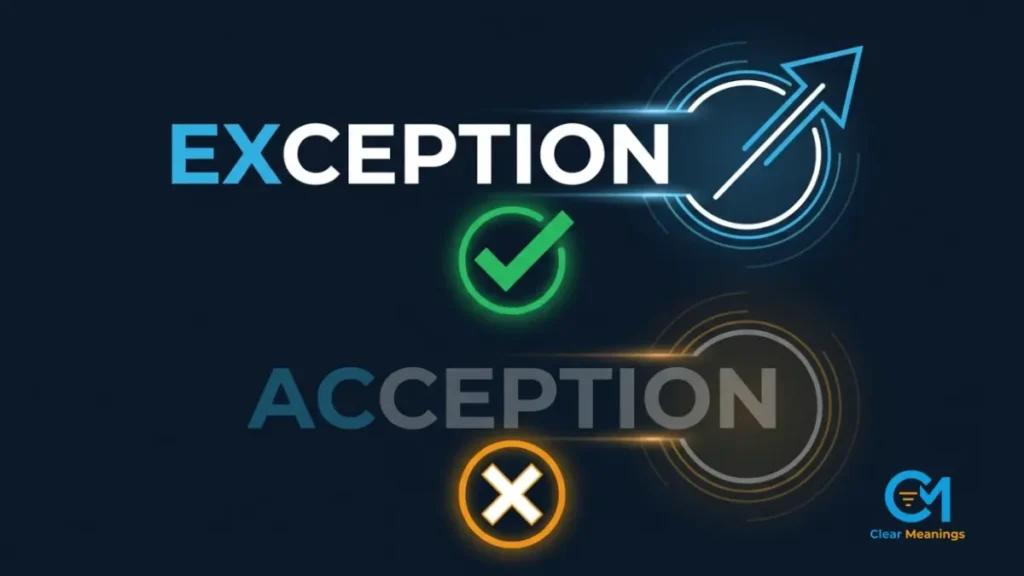
Analyzing Tone: When “Making An Exception” Sounds Assertive Versus Passive Aggressive
Word choice dictates the power dynamics in any corporate exchange. Using the phrase “making an exception” requires high emotional intelligence to ensure you sound authoritative rather than petty. Below are specific strategies and templates to maintain a professional advisory tone while managing frugal vs lavish business expenses or bending strict company policies.
Assertive Email Templates Requesting A One Time Exception
Asking a superior or vendor to bend a rule can sound unprofessional if phrased poorly. You want to present your request logically, showing exactly how to quantify vs qualify your data to justify the deviation. Use this template to maintain an assertive, respectful tone:
“Hi [Name], I am requesting a one-time exception to the standard processing timeline for the Smith account. Approving this today guarantees we secure the Q3 renewal contract. Please let me know if we can proceed.”
Polite Alternatives To “No Exceptions” For Difficult Client Communications
Telling a client “there are no exceptions” often triggers immediate defensiveness. You need corporate-safe vocabulary swaps that enforce boundaries without alienating the recipient. Consider using these alternatives in your next challenging email:
- “Our current policy requires standard processing for all vendors.”
- “We are unable to bypass the established protocol for this specific request.”
- “This guideline applies uniformly across all client accounts.”
Foolproof Memory Tricks To Master The Except And Accept Prefix Rules
Memorizing the correct spelling prevents you from repeatedly searching for understanding exception vs acception rules while on a deadline. A solid mental association locks in the right choice permanently. By breaking down the root words, you can avoid the 50 costly word mix-ups that ruin resumes and project absolute competence. Here are two fast mnemonics to use.
Visualizing The “Ex” Prefix For Exclusion And Exit
The prefix “ex” always signals a movement away from the center. Think of words like exit, exclude, and expel. When something is an exception, it is being taken out of the normal group or standard rule.
The “Acceptable Agreement” Mnemonic For Fast Proofreading
The prefix “ac” links directly to the concept of agreeing or moving toward something. Think of words like accept, acknowledge, and acquire. If you are trying to describe something left out of a rule, an “ac” prefix directly contradicts your goal, creating a resolving a paradox vs paradigm in strategy moment in your writing.
Crucial Inquiries Surrounding Exception Vs Acception Rules
Professionals frequently encounter highly specific situations where this vocabulary mix-up causes hesitation. These quick answers resolve the most common questions regarding strict grammatical rules and formal sentence structures. We address the specifics below to clear up any lingering confusion about distinguishing emasculate vs demasculate phrasing and exception-related queries.
Is “Acception” Officially Recognized In The English Dictionary?
“Acception” appears in some unabridged dictionaries strictly as an obsolete term from the 16th century meaning “acceptance.” It has no place in modern US English and will be marked as a typo by any professional reader.
Should You Write “Making An Exception” Or “Making An Acception”?
You should exclusively write “making an exception.” This phrase correctly indicates that you are excluding a specific case from the standard rules.
Is The Phrase “No Acception” Ever Grammatically Valid?
The phrase “no acception” is never grammatically valid in any modern context. The only correct phrasing is “no exception,” meaning the rule applies to absolutely everyone and everything.
How Do You Phrase “With The Exception Of” In Corporate Settings?
Use “with the exception of” to cleanly isolate a variable in a formal report (e.g., “All departments met their goals, with the exception of marketing”). Professional synonyms include “excluding,” “save for,” or “apart from.”
What Is The Best Synonym For Exception In Legal Writing?
In legal or highly formal documents, synonyms like “exemption,” “exclusion,” or “deviation” often provide better specificity. Choose “exemption” when referring to a release from an obligation, like a sex fee.