


Many professionals struggle when trying to articulate the feeling of being stripped of their confidence or authority. You might hesitate between using the word “emasculate” or its popular internet variant “demasculate” when drafting a sensitive email or human resources report.
Choosing the wrong variation can instantly undermine your credibility or escalate workplace tension unnecessarily. This guide breaks down the correct vocabulary to use when discussing power dynamics, along with practical templates to keep your communication assertive and professional.
The Quick Answer: Emasculate vs Demasculate Proper Usage
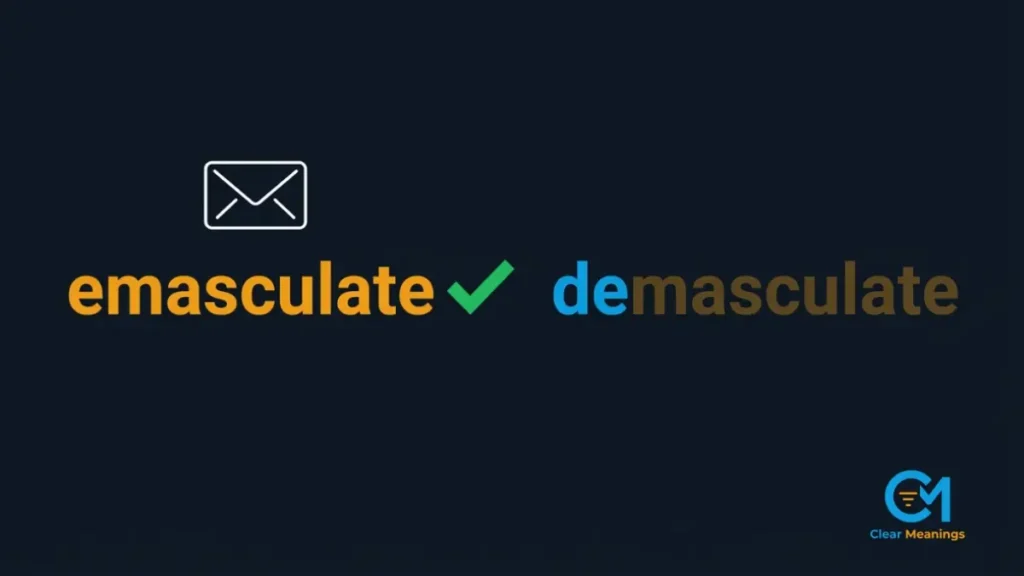
Emasculate is the standard, dictionary-recognized verb meaning to deprive a person of their male identity, strength, or power. Conversely, demasculate is a non-standard, fabricated variant that does not exist in major dictionaries. You should always use “emasculate” in professional writing to maintain credibility and accuracy. Using “demasculate” signals a lack of vocabulary refinement.
Correct Definition of “Emasculate”
The term “emasculate” refers to the act of weakening someone or depriving a man of his traditional masculine role or identity. Sociologists and linguists accept this word as the definitive term for describing these specific social dynamics. Understanding the core definition is the first step toward mastering words that command respect in professional emails.
When used in a modern corporate setting, the word usually describes a psychological effect rather than a physical one. It highlights actions that severely undercut a person’s confidence or decision-making power. You will often see this word used in critical analyses of workplace bullying or toxic management styles.
The Problem With “Demasculate”: A Word That Doesn’t Exist
Many people assume “demasculate” is the correct spelling because the prefix “de” commonly indicates reversal or removal in English. However, this assumption leads to an embarrassing vocabulary error in formal documents. We must clarify why this fabricated term persists and review the actual definitions associated with these concepts to avoid confusion.
Literal Biological Meaning of “Emasculate”
While modern professionals use the term figuratively, “emasculate” historically carries a literal biological meaning. In veterinary medicine and botany, it refers to the physical removal of male reproductive organs. This clinical origin explains why the word carries such intense psychological weight when applied to social interactions today.
Analyzing Tone and Professional Perception of Emasculate
Word choice dictates how your colleagues perceive your emotional intelligence and leadership capabilities. Using highly charged vocabulary in the wrong setting can instantly derail a productive conversation. We will evaluate how the word “emasculate” functions across different environments and when it crosses the line into unprofessionalism.
No Linguistic Basis for “Demasculate”
Before analyzing tone, we must reiterate that “demasculate” offers no linguistic foundation for any argument. Etymologists confirm that the word simply resulted from widespread public confusion over standard prefixes. Using it in a debate automatically lowers the perceived validity of your argument.
When Emasculate Sounds Too Aggressive in Workplace Feedback
Using “emasculate” during performance reviews or dispute mediations carries heavy emotional baggage. The word often triggers immediate defensiveness because it attacks a person’s identity rather than addressing specific professional behaviors. Managers should avoid this term entirely when providing constructive criticism.
Instead of focusing on identity, address the exact actions causing the problem. You can maintain a neutral tone by discussing how certain behaviors impact team dynamics or workflow efficiency.
Formal Scenarios Where Emasculate Fits Perfectly
In academic, sociological, and literary contexts, “emasculate” serves as an accurate and neutral descriptor. Scholars frequently use it to analyze systemic power dynamics, historical gender roles, or character development in literature. The word provides precise framing for complex psychological studies.

When drafting a formal analysis or academic paper, you can confidently use this term without fear of sounding overly aggressive. It remains the academically approved vocabulary for these specific discussions.
Quick Reference Table: Emasculate vs Demasculate
Understanding the exact distinctions between these terms requires a clear visual comparison. Review this quick reference guide to solidify your understanding of emasculate vs demasculate usage rules.
| Feature | Emasculate | Demasculate |
| Dictionary Status | Officially recognized | Non-standard (Fabricated) |
| Prefix Origin | Latin (e- meaning “out of”) | Incorrect modern English blending |
| Professional Use | Acceptable in academic/formal writing | Unacceptable in all formal writing |
| Tone | Assertive, intense, academic | Colloquial, unrefined |
Is Demasculate a Word Recognized by Webster and Scholars
Despite massive search volume and widespread conversational use, “demasculate” does not appear in Merriam-Webster or the Oxford English Dictionary. Lexicographers view it as a mispronunciation or mistaken spelling that gained traction through verbal repetition. We will outline exactly how this non-standard term bypassed traditional linguistic filters.
The Linguistic Origins of Demasculate and Internet Culture
Social media platforms and informal forums popularized “demasculate” by repeating the error in viral posts and videos. Colloquial speech often prioritizes phonetic convenience over historical validity. Users naturally attached the common “de” prefix to “masculine,” unintentionally inventing a new word that sounds plausible.
Demasculate Pronunciation and Regional Acceptance
You will hear “demasculate” pronounced (dee-MAS-kyuh-late) frequently in casual US demographics and informal social settings. While friends might understand your meaning perfectly, regional acceptance does not translate to corporate appropriateness. The term remains strictly confined to spoken slang and informal text messages.
Managing Emasculating Behaviors in Corporate Communication
Navigating office power dynamics requires strategic communication that establishes boundaries without escalating conflict. You must address boundary-crossing effectively while avoiding loaded terminology that might undermine your professional authority. The following strategies provide actionable advice for maintaining control over your career narrative.
Corporate Email Templates for Addressing Undermining Behavior Assertively
You can tackle the issue of feeling sidelined by colleagues without ever using the word “emasculated.” Addressing the action directly forces the other party to focus on their behavior rather than their intent.
Template for addressing a colleague who speaks over you: “Hi (Name), I noticed you stepped in to answer the client’s questions during my presentation today. Moving forward, I will handle all responses during my designated speaking time to ensure we present a unified strategy.”
Template for addressing a manager who bypasses your authority: “Hi (Name), I need to remain the primary point of contact for the design team to prevent project delays. Please route all future feedback directly to me so I can distribute it efficiently.”
Choosing the Right Emasculate Synonym for Human Resources Reports
Filing a formal HR complaint requires absolute objectivity. You must select vocabulary that documents facts without injecting emotional interpretation. Words like “marginalize,” “undermine,” or “disempower” serve as excellent alternatives that keep your documentation highly professional.
Using objective synonyms helps HR representatives understand the exact nature of the workplace issue. This approach is similar to understanding how to quantify vs qualify your accomplishments by focusing on measurable facts rather than feelings.
Emasculate vs Effeminate and Understanding Masculated Mixups
Writers frequently confuse “emasculate” with “effeminate,” but the two terms describe completely different concepts. “Emasculate” is an action that removes power, whereas “effeminate” is an adjective describing traits traditionally associated with femininity. Disambiguating these related terms prevents embarrassing errors when discussing gender norms and social expectations.
Identifying the Exact Emasculate Meaning Opposite for Constructive Dialogue
To drive constructive conversations, you must know how to express the exact opposite of stripping someone’s power. Powerful antonyms like “empower,” “embolden,” or “validate” provide the necessary vocabulary for building up your colleagues. Using positive framing often resolves conflicts faster than focusing on negative actions.
Why Demasculinize Is Frequently Preferred Over Demasculate
If you need a word that explicitly means removing masculine traits, “demasculinize” serves as a linguistically accepted alternative. Unlike the fabricated “demasculate,” this term follows proper English morphological rules. It provides a structurally sound option when understanding paradox vs paradigm in complex sociological debates.
Common Questions About Emasculate and Demasculate
People frequently misunderstand how to apply these concepts in everyday situations. We have compiled the most accurate answers to the most common queries regarding this specific vocabulary.
What Constitutes Emasculating Behaviors in Modern Workplaces
Specific actions like public reprimands, severe micromanagement, or intentionally withholding critical information strip employees of their agency. These behaviors directly undermine a person’s confidence and ability to perform their job duties effectively.
Clarifying the Difference Between Demasculating and Emasculating
“Emasculating” is the standard, grammatically correct verb for depriving someone of power or male identity. “Demasculating” is a fabricated, non-standard variant born from internet culture that major dictionaries do not recognize.
Defining the Standard Word for Stripping a Man of His Masculinity
Psychological and sociological studies exclusively use the word “emasculate” to describe the removal of a man’s masculine identity or power. You should rely on this definitive term to ensure total accuracy in your word choice.
How Do You Professionally Address Feeling Undermined
Address the specific actions objectively rather than using emotionally charged words to describe how the actions made you feel. Focus on terms like “sidelined” or “disempowered” to maintain a constructive and professional tone.
Is There Any Context Where Demasculate Is Acceptable
The term is only acceptable in highly informal, casual conversations among friends where strict grammar rules do not apply. You must completely avoid it in academic papers, professional emails, and formal documentation.