
Professionals often pause when choosing between a paradox and a paradigm in high-stakes communications. Selecting the wrong term can accidentally shift the tone of your message from insightful to confusing. This guide outlines the exact boundaries of paradox vs paradigm to ensure your vocabulary aligns with your intent.
The Quick Answer: Defining The Contextual Boundaries Of Paradox Vs Paradigm
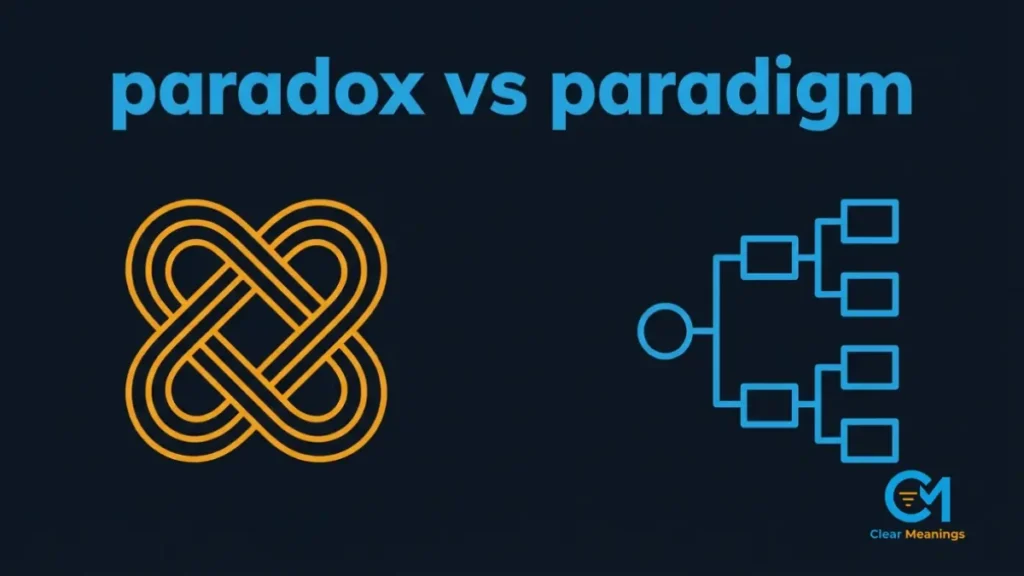
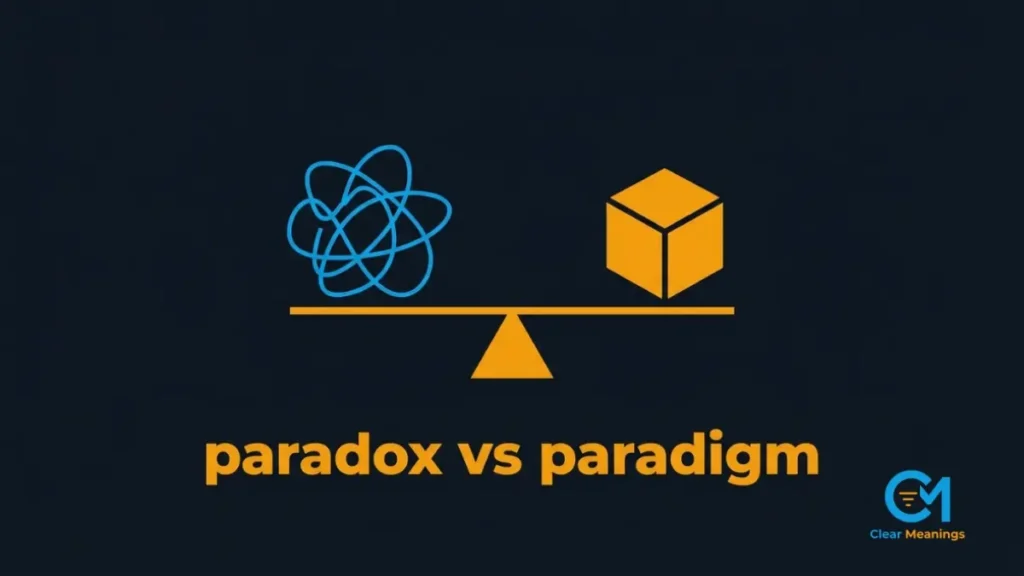
A paradox is an illogical contradiction that reveals an underlying truth when examined closely. A paradigm is a standard model, pattern, or overarching framework that dictates how things are currently done. Use paradox to highlight conflicting realities, and use paradigm to describe structural business frameworks.
Tone Analysis: Perception Of Paradox Vs Paradigm In Corporate Environments
Selecting the right vocabulary determines how colleagues and clients perceive your leadership capabilities. Using these specific terms carries distinct tonal weight that requires careful management. Review the subsections below to see how each word impacts your professional image.
How Paradigm Shifts Signal Strategic Vision To Stakeholders
Using this term correctly demonstrates a macro-level understanding of industry trends. It shows executives that you are proposing a fundamental change in operations rather than a minor adjustment. When navigating corporate environments, mastering this vocabulary is a key component of selecting words that command respect.
The Risks Of Highlighting A Paradox In Client Communications
Pointing out a contradiction to a client requires extreme diplomacy. If handled poorly, the client may feel you are calling their requests unreasonable or illogical. Reserve this word for neutral analysis rather than direct feedback on client decisions.
Scenario Testing: Paradox Vs Paradigm In Professional Email Templates
Theoretical definitions only go so far when you are staring at a blank email draft. These copy-and-paste frameworks show you exactly how to deploy these terms effectively. Apply these templates to your next high-priority communication.
Template For Proposing A Paradigm Shift To Executive Management
Subject: Proposal for Q3 Operations Restructuring
Hi Team,
Our current production model has reached its efficiency limit. To meet our new revenue targets, we need a complete paradigm shift in how we allocate resources. I have attached a brief outline detailing this proposed structural change for your review.
Template For Addressing A Resource Paradox With Your Internal Team
Subject: Navigating the Q4 Budget and Deliverables
Hi Everyone,
We are currently facing a resource paradox. We are expected to increase our output by 20% while simultaneously cutting contractor hours by half. Let us schedule a brief meeting tomorrow to discuss how we can balance these contradictory directives.
Contextualizing Related Vocabulary: Paradox Vs Dichotomy And Oxymoron
Precise writers must also distinguish these concepts from similar rhetorical devices. Mixing up these related terms undermines the clarity of your arguments. Compare the distinctions below to refine your analytical writing.
| Term | Definition | Professional Example |
| Paradox | A seemingly impossible contradiction. | “We need more experience to get the job, but need the job to get experience.” |
| Paradigm | A standard model or framework. | “The shift to remote work created a new paradigm for HR.” |
| Dichotomy | A division into two opposite parts. | “The dichotomy between marketing and sales budgets.” |
| Oxymoron | Two opposing words paired together. | “An accurate estimate.” |
Why A Simple Dichotomy Fails To Qualify As A True Paradox
A dichotomy simply splits a concept into two opposing parts, like day and night. It does not contain the impossible contradiction required to form a true paradox. Confusing the two makes your analysis seem imprecise to detail-oriented readers.
Selecting An Oxymoron Instead Of A Paradox For Rhetorical Impact
An oxymoron places two contradictory words directly next to each other, such as “deafening silence.” It is a localized figure of speech used for dramatic effect. A paradox represents a broader situational contradiction that requires explanation.
Applied Context: Recognizing The Five Leadership Paradoxes
Abstract vocabulary becomes much easier to grasp when applied to real-world management theories. Leaders navigate impossible situations daily while trying to maintain standard operational frameworks. Examine these examples to see how these concepts interact in the workplace.
Balancing Authority And Empathy In Modern Management Paradigms
Managers are expected to enforce strict corporate policies while remaining deeply empathetic to individual team members. This creates an ongoing tension between maintaining the established structural paradigm and adapting to human needs. Navigating this successfully requires high emotional intelligence and flexible communication strategies.
The ADHD Paradox In Professional Productivity Frameworks
Standard corporate workflows often demand rigid, linear focus that conflicts with neurodivergent working styles. Employees with ADHD frequently experience a paradox where they hyper-focus on complex problems but struggle with simple administrative tasks. Acknowledging this reality helps companies build more inclusive and effective operational models.
Crucial Queries Clarifying Paradox Vs Paradigm
Even with clear definitions, edge cases frequently cause confusion during the writing process. Review these common questions to resolve any lingering uncertainty. These answers provide final clarity on complex usage scenarios.
Are Oxymoron And Paradox Identical Linguistic Concepts?
No. An oxymoron is a two-word phrase containing opposing terms, whereas a paradox is a broader statement or situation that contradicts itself.
What Qualifies As A New Paradigm In Daily Business Operations?
A change qualifies only when it fundamentally replaces the old system, such as switching from a strict hierarchy to a completely flat organizational structure.
How Is Einstein’s Twin Paradox Relevant To Modern Abstract Concepts?
It illustrates how an outcome can completely defy basic human logic while remaining scientifically accurate. Writers use this to describe situations that seem impossible but are mathematically true.
What Constitutes The Golden Paradox In Societal Norms?
This refers to the philosophical concept where the pursuit of happiness often makes people less happy. It is frequently cited in sociological essays to highlight the contradictory nature of human desires.
Is The Phrase “I Am Lying” A True Logical Paradox?
Yes. If the statement is true, then the speaker is lying, which makes the statement false, creating an endless, unresolvable loop.