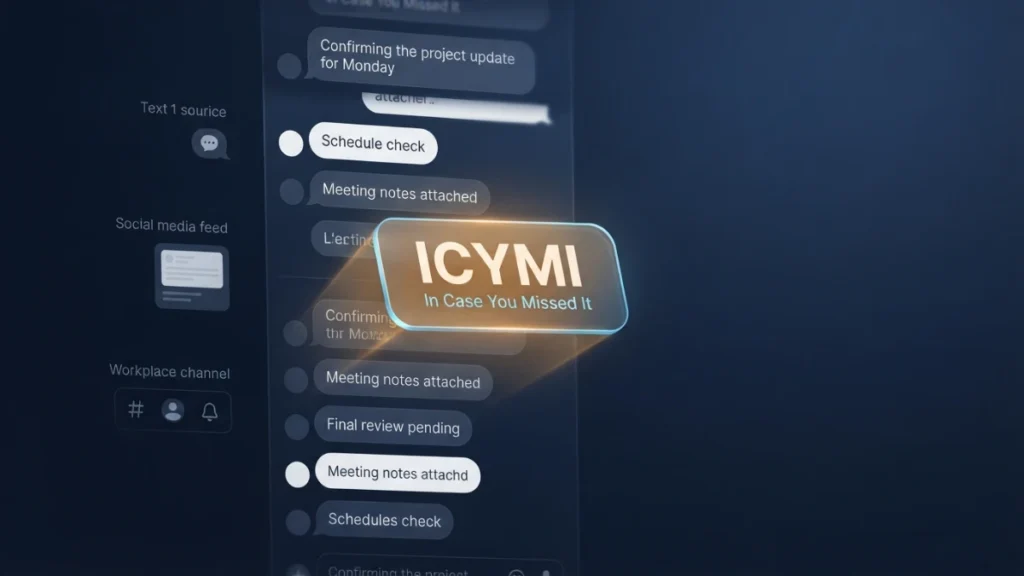

ICYMI means "in case you missed it." People attach it to a post, link, or update they already shared so others who skipped it the first time can catch up.
It shows up everywhere from group chats to work channels. This guide covers what it signals, how it reads in different settings, and where it belongs in the broader slang hub.
ICYMI Meaning: What "In Case You Missed It" Says In One Line
ICYMI stands for "in case you missed it." It flags content that was shared earlier and is being resurfaced for anyone who did not see it.
The abbreviation works as a label, not a sentence. It sits in front of a link, a screenshot, a quote, or a summary.
ICYMI: the new schedule is pinned in the group.
The Tone Behind ICYMI: Helpful Nudge Or Passive-Aggressive Reminder
Most of the time, ICYMI is neutral and friendly. It tells people there is something worth catching up on, with no blame attached.
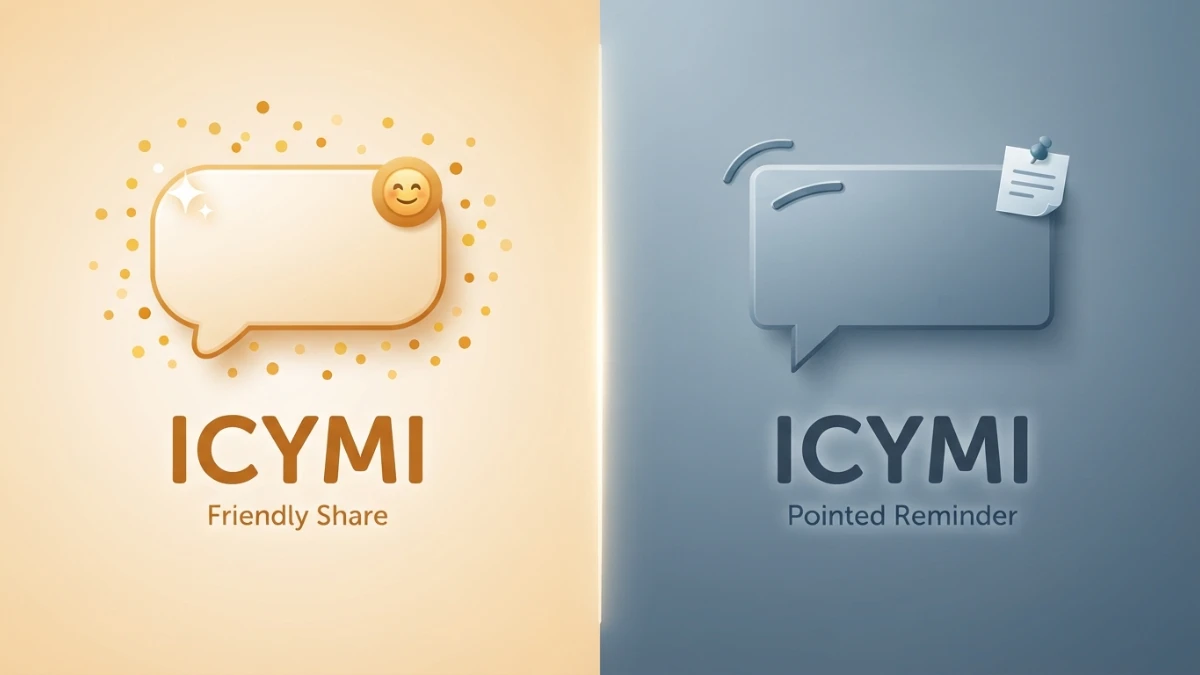
The tone shifts when the same information was already sent and ignored. Then it can read as "I already told you this."
- Friendly: Used for news, memes, highlights, or a late share.
- Neutral: Used to repost an announcement for a wider audience.
- Pointed: Used right after a question that was already answered earlier in the thread.
Punctuation and timing change the feel. A lone "ICYMI" under someone's question lands colder than "ICYMI, link is above!"
How ICYMI Appears In Texts, Tweets, And Slack Threads
The abbreviation is flexible, so its job changes by platform. Here is how it typically looks in real use.
| Platform | Typical Use | Sample |
|---|---|---|
| Text message | Resending a link a friend skipped | ICYMI, she posted the full video |
| X (Twitter) | Reposting an earlier thread or highlight | ICYMI: here is yesterday's thread |
| Instagram or TikTok | Pointing to a past post | ICYMI, last week's recap is pinned |
| Slack or Teams | Resurfacing an announcement | ICYMI: office hours moved to 3 PM |
Many news and sports accounts also use it as a recap label. Writing it in capitals, as ICYMI, is the standard form.
Is ICYMI Safe For Work Emails And Professional Chats
Yes, ICYMI is generally safe at work, especially in Slack, Teams, and internal updates. It is one of the more established abbreviations in professional chat, much like the ones covered in the TLDR meaning guide.
Formal emails to clients, executives, or external partners are a different case. There, spelling out "In case you missed it" or "As a reminder" reads as more polished.
- Fine: Team channels, project threads, internal newsletters.
- Use with care: Messages to senior leaders you do not know well.
- Skip: Legal notices, formal letters, and first contact with a client.
Polite Ways To Reply When Someone Sends You An ICYMI
A good reply acknowledges the share and moves on. You do not need to explain why you missed it.
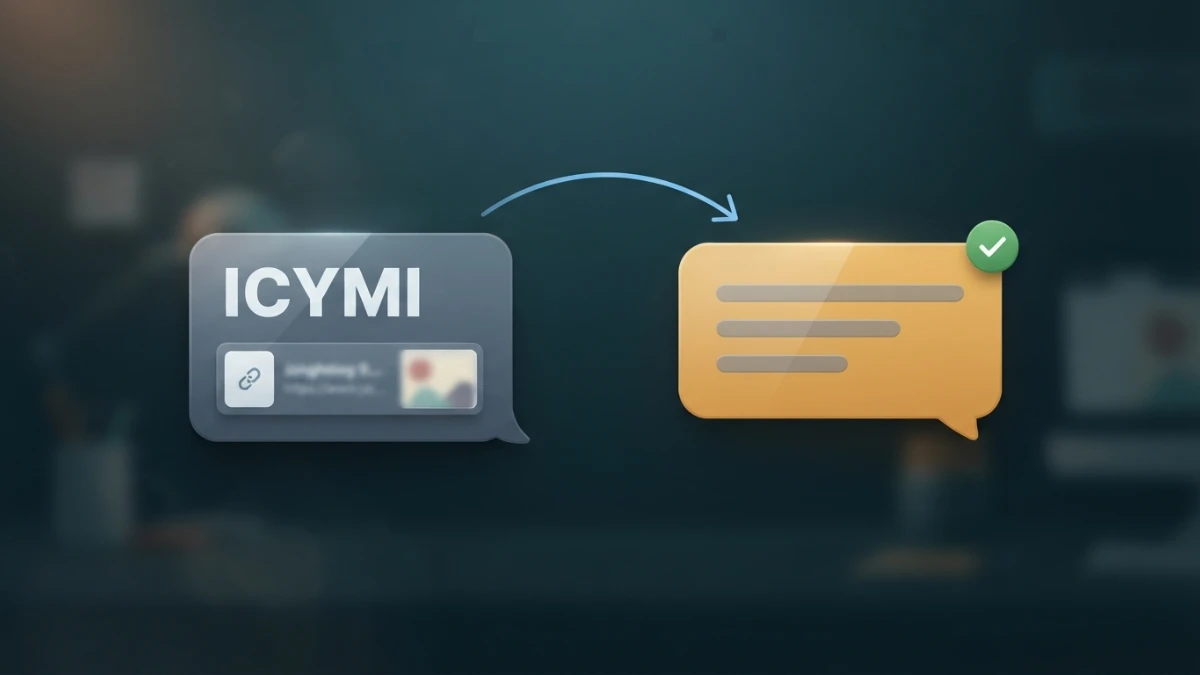
- "Thanks for resharing, I missed this one."
- "Appreciate the heads up, reading it now."
- "Got it, thanks for flagging."
If the ICYMI felt like a dig, keep your answer calm and brief. "Thanks, I will check it before the meeting" closes the loop without friction.
Coworker: ICYMI, the budget file is in the shared folder.
You: Thanks, just opened it.
ICYMI Alternatives That Sound Friendlier In Corporate Messages
If you want a softer or more formal tone, swap the abbreviation for a full phrase. The right choice depends on who is reading.
- "In case you missed it": The spelled-out version, still casual but clearer.
- "Resharing this in case it got buried": Warm and blame-free.
- "A quick reminder": Neutral for deadlines and tasks.
- "Sharing again for visibility": Common in team announcements.
- "For anyone who missed it": Inclusive and group-friendly.
Similar shorthand like FTFY can come across as playful or corrective, so ICYMI is usually the milder option of the two. For time-related shorthand in message threads, see how ETA is used on Reddit.
The One-Line Takeaway On ICYMI Etiquette
Use ICYMI to resurface something useful, keep the tone friendly, and spell it out in formal emails.
Common Questions About ICYMI
What does ICYMI stand for?
ICYMI stands for "in case you missed it." It introduces content that was shared earlier.
Is ICYMI rude or passive-aggressive?
Usually not. It only turns pointed when it is used to resend information someone already ignored.
Does ICYMI go at the start or the end of a message?
It almost always goes at the start, followed by a colon or comma and the content. Placing it first tells readers right away that the message is a repeat.
Should ICYMI be written in all caps?
Yes. All caps is the standard way to write an initialism like this one. Lowercase "icymi" appears in casual texting but is less common in professional chats.
How is ICYMI different from FYI?
ICYMI points to something shared before, while FYI passes along new information. One resurfaces, the other informs.
Can you use ICYMI in a professional email?
You can in internal emails with colleagues you know well. For clients and formal messages, write out "in case you missed it" instead.