
A kid shouts “six seven” across the cafeteria. A teenager drops “67” into the group chat with no context. A coworker’s child wobbles both palms up and down at dinner, and nobody in the room can explain why.
This guide covers the 6-7 meaning in slang, the story behind the chant, and where it lands on the workplace appropriateness scale. If you came here from our broader list of Gen Z workplace slang, this is the deeper look at the one term that confuses adults the most.
6-7 Meaning in Slang: A Nonsense Meme Word With No Fixed Definition
6-7 is a Gen Alpha meme phrase with no literal meaning. Kids shout it, usually while rocking their palms up and down, purely for laughs and in-group bonding. It traces back to a Skrilla song and basketball clips, but the joke is that it means nothing. It carries no offensive meaning.
Urban Dictionary entries disagree because there is no official definition to match. The phrase works as a signal: if you get the joke, you are in the group.
Where the 6-7 Meme Came From
The phrase did not start in a classroom. It began in music, then spread through sports clips and short videos before kids carried it into real life. The two subsections below follow that path.
The Skrilla “Doot Doot (6 7)” Track Behind the Chant
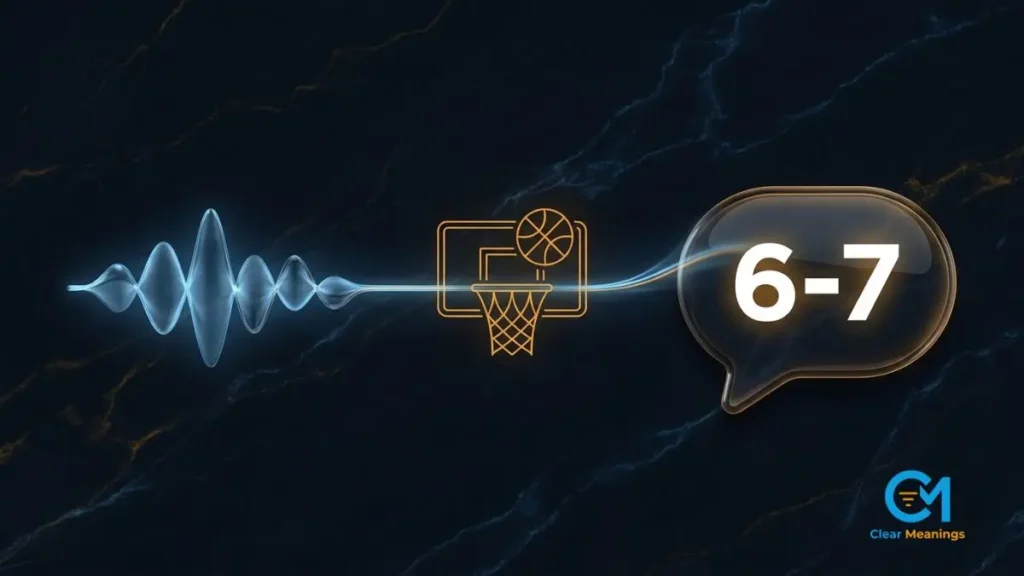
The most widely cited source is “Doot Doot (6 7)” by rapper Skrilla. The “6 7” in the lyric became a hook that listeners repeated on its own, detached from the song.
Edits on TikTok and Instagram looped that moment. Repetition did the rest: the phrase became a sound people reacted to, not a sentence anyone needed to understand.
How Basketball Clips and the “6-7 Kid” Made It Go Viral
Basketball fans linked the number to LaMelo Ball, who is listed at 6 feet 7 inches tall. Highlight edits paired his plays with the Skrilla track, and the number became shorthand inside sports content.
Then a viral clip of a young fan yelling “6-7” at a game turned the phrase into a character-driven meme. After that, kids copied the shout and the gesture in schools, gyms, and group chats.
Why Kids Chant 6-7 and Make the Hand Gesture
The chant is a social ritual more than a message. It shows up in hallways, locker rooms, and comment sections, often with a physical move attached. The next two subsections cover the gesture and the humor behind it.
The See-Saw Hand Motion Explained
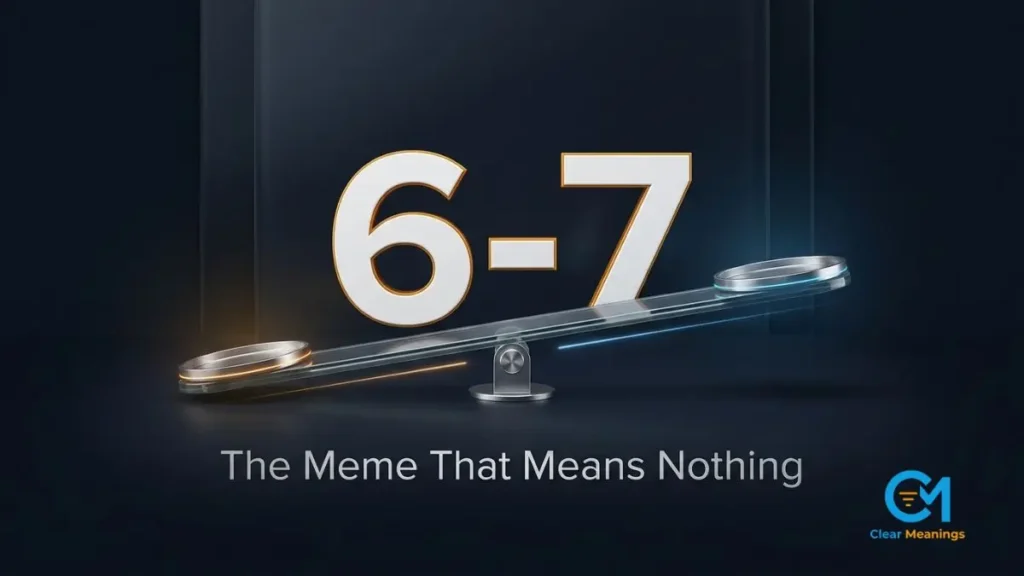
The gesture is simple: both palms face up, and the hands move up and down in alternating motion, like a scale weighing two objects. Kids pair it with the shout “six, seven!”
It appears when someone says a number near 6 or 7, when a classmate reacts to a joke, or for no reason at all. The “no reason” version is the most common.
Why Gen Alpha Finds a Meaningless Joke Funny
Gen Alpha humor often rewards absurdity. A phrase that means nothing cannot be explained, and a joke that cannot be explained keeps outsiders out.
That is why adults asking “but what does it mean?” tends to make it funnier. The question confirms the phrase is working.
How to Use 6-7 in a Text Without Sounding Out of Touch
Most adults should not use it at all. It reads as a reaction, not a statement, and it only lands when the other person is already in on the joke. Used by someone past their teens, it often signals that you are trying too hard.
If you do use it, match the context. For a similar reaction-style term, see what NGL means in slang, which has clearer rules for adult use.
| Situation | Safe to Use? | Why |
| Group chat with teens or younger relatives | Yes | The joke is expected there |
| Casual Slack channel with a younger team | Maybe | Works only if others already use it |
| Client email or formal report | No | Reads as unprofessional |
| Replying to a stranger online | No | Without context, it looks random |
If someone asks “are you 6-7?”, they are not asking about your height or age. It is a playful prompt to join the bit. A matching “six, seven!” or a laughing emoji is enough.
Is 6-7 Inappropriate? The Verdict for Slack, Email, and Classrooms
The phrase itself is not vulgar, and no credible source ties it to an offensive meaning. Context decides whether it is acceptable. The two subsections below separate real concerns from rumors.
The 6-7 Controversy: Real Concern or Overblown Panic?
Some parents worry that “67” hides a crude double meaning, partly because kids rarely explain it. That worry is not supported: the phrase has no established inappropriate definition, and its origin is a song hook and a height reference.
The real issue is disruption. Teachers have reported that repeated chanting derails lessons, and some have asked students to stop. Harmless in content, annoying in volume.
When a Teacher or Manager Should Actually Step In
Step in when the chant interrupts instruction, a meeting, or a client call. Step in if it is used to mock someone or to pull attention away from a person who is speaking.
Leave it alone in casual hallway banter or a lighthearted chat thread. The same rule applies to other reaction slang, such as SMH in text messages: fine in a casual exchange, out of place in formal writing.
Workplace-Safe Alternatives to 6-7 in Professional Messages
If a younger colleague uses 6-7 and you want to respond without joining the meme, a warm, neutral reply works better than copying it. You can also steer toward plain language when clarity matters.
Try these replacements in Slack or email:
- “Ha, good one.” (acknowledges the humor)
- “Understood, thanks for the update.” (keeps it professional)
- “That made me laugh. Can we get back to the agenda?” (redirects politely)
For announcements, a clear opener beats slang. Our guide to what PSA means in a message shows a format that signals importance without sounding casual.
Sample Slack reply to a joke thread:
“Ha, I am not fluent in that one yet. Let’s circle back to the Q3 numbers at 2 p.m.”
How to Explain 6-7 to Parents, Managers, and Older Coworkers
Keep the explanation short. Older audiences usually want to know two things: is it harmful, and should they react.
Copy-ready scripts:
- For a parent: “It is a meme phrase with no real meaning. Kids say it for fun, and it is not rude.”
- For a manager: “It is internet slang from a song and basketball clips. It is harmless, but worth keeping out of client-facing messages.”
- For an older coworker: “Think of it as an inside joke that everyone shares and nobody can define. You can ignore it.”
Pair this with other decoding guides when needed. A manager new to texting shorthand may also benefit from our explainer on what SRS means in a text.
Is 6-7 Already Cringe? How Long This Meme Might Last
Memes follow a pattern: niche, viral, mainstream, then cringe. Once adults and brands start using a phrase, the original audience tends to move on.
6-7 is still active among kids, but adult use is the usual signal that a meme is fading. Compare it with rizz, which stayed in circulation longer because it carried a clear meaning. Meaningless phrases tend to burn out faster.
If your goal is to sound current, skip it. If your goal is to understand it, you now have everything you need.
Common Questions About 6-7 Meaning
What does 67 mean on TikTok and in Urban Dictionary?
It is a meme phrase with no fixed meaning, used for humor and group bonding. Urban Dictionary entries vary because the term is intentionally undefined.
Why are kids chanting 6-7?
The chant is a shared in-joke that spread through a Skrilla song and basketball clips. Saying it together signals belonging.
Is 67 bad for kids?
No, the phrase itself has no inappropriate meaning. The main issue is classroom disruption when it is repeated during lessons.
Is everyone still saying 67?
It is still common among younger kids, but its peak has likely passed. Adult use is usually a sign the trend is fading.
When did 6-7 become slang, and who started it?
It grew from the Skrilla track “Doot Doot (6 7)” and spread through basketball edits and viral clips. No single person owns it, and its exact start date is hard to pin down.